
Types of Truck Accidents
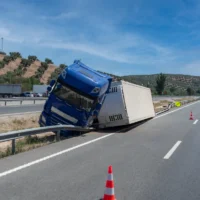 Truck accidents are among the most serious and destructive collisions on New York roadways. Due to their massive size, weight, and stopping distances, commercial trucks can cause catastrophic injuries and extensive property damage when crashes occur. Understanding the different types of truck accidents and how they often result from driver or trucking company negligence can help injured victims recognize liability and pursue compensation. If you or a loved one were injured in a truck crash in Ulster County or the Hudson Valley, call Rusk, Wadlin, Heppner & Martuscello, LLP, to speak with one of our experienced and dedicated Kingston truck accident lawyers.
Why Truck Accidents Are Different From Car Accidents
Truck accidents differ significantly from typical passenger vehicle crashes. Tractor-trailers and other commercial trucks can weigh up to 80,000 pounds when fully loaded, making them far more difficult to control and stop. Truck drivers must navigate long hours, tight delivery schedules, and challenging road conditions, while trucking companies are responsible for hiring, training, supervision, maintenance, and compliance with federal and state safety regulations.
When negligence occurs at any point in this system, the consequences can be devastating. Certain types of truck accidents are especially dangerous and frequently linked to preventable safety failures.
Rear-End Truck Accidents
Rear-end collisions involving trucks are often far more severe than those involving two passenger vehicles. Because of their size and braking limitations, trucks require significantly more distance to stop. When a truck driver follows too closely or fails to slow down in traffic, rear-end crashes can occur with tremendous force.
These accidents are commonly caused by driver fatigue, distracted driving, speeding, or failure to account for traffic congestion. In some cases, defective brakes or poor maintenance may also prevent a truck from stopping in time. Rear-end truck accidents often result in traumatic brain injuries, spinal cord injuries, and fatalities, particularly when a smaller vehicle is struck from behind.
Jackknife Accidents
Jackknife accidents occur when a truck’s trailer swings outward at an angle, forming a shape similar to a folding knife. These accidents typically happen when a driver brakes suddenly, chooses the wrong braking method, or loses traction, causing the trailer to skid uncontrollably.
Jackknife accidents are often linked to excessive speed, improper braking, wet or icy road conditions, or improperly loaded cargo. Driver inexperience and inadequate training can also play a role, as controlling a skidding trailer requires specialized skill. Once a truck jackknifes, it can block multiple lanes of traffic and collide with several vehicles at once, making these accidents particularly dangerous.
Underride Accidents
Underride accidents are among the deadliest types of truck crashes. These collisions occur when a smaller vehicle slides underneath the rear or side of a truck’s trailer. Because the trailer’s frame often sits higher than a passenger vehicle’s hood, underride crashes can result in severe head and upper-body injuries or death.
Underride accidents frequently occur when trucks stop suddenly, make improper turns, or lack adequate underride guards. Poor visibility, insufficient lighting, and failure to use reflective materials can also contribute. In many cases, trucking company negligence, such as failing to install or maintain proper safety guards, plays a significant role in these tragic collisions.
Rollover Accidents
Truck rollovers happen when a commercial vehicle tips onto its side or roof, often due to instability or loss of control. These accidents are especially common on highway ramps, sharp curves, and uneven road surfaces.
Rollover accidents may result from speeding, abrupt steering maneuvers, driver fatigue, or improperly balanced cargo. Overloaded or unevenly loaded trailers raise a truck’s center of gravity, making rollovers more likely. Negligent loading practices and inadequate driver training are frequently contributing factors.
Wide-Turn Accidents
Because of their size, trucks require extra space to make turns, particularly right-hand turns. Wide-turn accidents occur when a truck swings left before turning right or fails to account for nearby vehicles, cyclists, or pedestrians.
These accidents often happen at intersections and can trap smaller vehicles between the truck and the curb. Driver inattention, poor mirror use, and lack of proper training are common causes. In urban and suburban areas, wide-turn accidents pose a significant risk to surrounding traffic.
Sideswipe Accidents
Sideswipe accidents occur when a truck collides with another vehicle traveling alongside it. These crashes often happen during lane changes or merges and can force smaller vehicles off the road or into other traffic.
Blind spots play a major role in sideswipe accidents. Commercial trucks have large areas where drivers cannot see other vehicles, and failure to check mirrors or use turn signals can lead to serious collisions. Negligent driving behaviors, including distracted driving and improper lane changes, are frequently to blame.
Tire Blowout and Mechanical Failure Accidents
Mechanical failures, including tire blowouts, brake failures, and steering malfunctions, can cause a truck driver to lose control without warning. Tire blowouts are particularly dangerous at highway speeds, where debris can strike nearby vehicles or trigger chain-reaction crashes.
These accidents are often the result of negligent maintenance, worn tires, defective parts, or failure to conduct required inspections. Trucking companies have a legal responsibility to maintain their vehicles in a safe operating condition, and failure to do so can create serious hazards for everyone on the road.
Multi-Vehicle Truck Accidents
Due to their size and momentum, tractor-trailers and other big rigs are frequently involved in multi-vehicle accidents. A single mistake by a truck driver, such as speeding or sudden braking, can lead to pileups involving multiple cars.
These crashes are especially common in heavy traffic or adverse weather conditions. Determining liability in multi-vehicle truck accidents can be complex, as multiple parties may share responsibility, including drivers, trucking companies, and maintenance providers.
How Negligence Leads to Truck Accidents
Most truck accidents are preventable and stem from negligence. Common forms of negligence include driver fatigue, distracted driving, speeding, improper training, negligent hiring practices, and failure to maintain vehicles. In some cases, trucking companies prioritize profits and delivery schedules over safety, increasing the risk of serious accidents.
Federal Motor Carrier Safety Administration (FMCSA) regulations establish safety standards for commercial trucking, including hours-of-service limits, inspection requirements, and cargo securement rules. Violations of these regulations often serve as key evidence in truck accident claims.
Frequently Asked Questions About Truck Accidents
What makes truck accident cases more complex than car accident cases?
Truck accident cases often involve multiple liable parties, extensive federal and state regulations, and large insurance policies. Investigating these cases requires reviewing driver logs, maintenance records, electronic data, and corporate practices.
Who can be held liable in a truck accident?
Depending on the circumstances, liability may rest with the truck driver, trucking company, cargo loaders, maintenance contractors, or manufacturers of defective parts.
Why are truck accident injuries often more severe?
The size and weight of commercial trucks increase the force of impact, making catastrophic injuries and fatalities far more likely than in passenger vehicle crashes.
How long do I have to file a truck accident claim in New York?
In most cases, New York law allows three years from the date of the accident to file a personal injury lawsuit, though certain claims may have shorter deadlines.
Holding Negligent Parties Accountable
Victims of truck accidents often face extensive medical treatment, lost income, and long-term physical and emotional challenges. Establishing how the accident occurred and identifying all responsible parties is essential to pursuing full compensation.
Truck accident claims require thorough investigation, prompt evidence preservation, and a detailed understanding of trucking regulations. Insurance companies representing trucking companies often act quickly to limit their exposure, making early legal involvement critical.
Legal Help for Truck Accident Victims in Ulster County
Truck accidents can change lives in an instant. When negligence leads to serious injuries or loss of life, injured victims and their families deserve accountability and financial recovery. An experienced personal injury attorney can investigate the crash, negotiate with insurance companies, and, if necessary, litigate in court to protect a victim’s rights.
If you or a loved one has been injured in a truck accident, seeking legal guidance can be an important step toward securing compensation for medical expenses, lost income, pain and suffering, and future care needs. In Ulster County and the mid-Hudson Valley, contact Rusk, Wadlin, Heppner & Martuscello, LLP, for support. We offer free consultations in person or over the phone at our office in Kingston (845-331-4100), Marlboro (845-236-4411), or toll-free throughout the Hudson Valley at (800) 566-4101. Contact us today.
