

New York’s New Comparative Negligence Law and What It Means for Car Accident Victims in the Hudson Valley
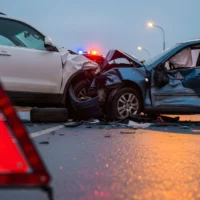
Car accident claims in New York have always involved questions about fault. Insurance companies routinely argue that injured drivers share responsibility for a crash, using allegations of speeding, distracted driving, improper lane changes, or other conduct to reduce the amount they must pay. However, a recent change to New York law has significantly altered how comparative negligence works in motor vehicle accident cases, making it more important than ever for accident victims to have experienced legal representation on their side.
At Rusk, Wadlin, Heppner & Martuscello, LLP, our Kingston auto accident attorneys help injured drivers throughout Ulster County and the mid-Hudson Valley protect their rights after serious car, truck and motorcycle crashes. With the recent changes to New York’s comparative negligence framework, the stakes are higher than ever when fault becomes an issue.
What Is Comparative Negligence?
Comparative negligence is the legal principle that allows fault for an accident to be divided among the plaintiff and defendant. For over fifty years, New York has been a “pure” comparative negligence state, meaning if an injured person was found partially responsible for a crash, their compensation would be reduced by their percentage of fault, regardless of how high that percentage is.
For example, if a jury determined that a driver’s damages totaled $100,000 but found that driver to be 20 percent responsible for the accident, the recovery would be reduced to $80,000. Even if the driver was 60 or 70% to blame, they would still receive $40,000 or $30,000 from the other negligent driver, respectively. Under New York’s longstanding pure comparative negligence system, an injured person could still recover compensation even if they were largely at fault for the collision.
While comparative negligence remains embedded in New York law, recent legislative changes have shifted how fault is evaluated and presented in certain motor vehicle accident cases, creating new challenges for injured plaintiffs.
How Has the Law Changed and Why Does It Matter?
While New York retains the doctrine of pure comparative negligence for most personal injury claims, such as a slip and fall in a grocery store or restaurant, the law was amended last month specifically for motor vehicle accidents. New York now follows a modified comparative negligence rule for car crashes. For motor vehicle accidents, an injured victim cannot pursue a claim if they bear the majority of fault in causing the crash. In other words, so long as they are 50% or less to blame, they can pursue a negligence claim against the other driver for their serious injuries, and if successful, recover compensation reduced by their percentage of negligence. But if they are 51% or more at fault, they simply do not have a legal claim for any damages at all, regardless of how serious their injuries are.
Under New York’s amended comparative negligence rules, the issue of fault has become even more significant because allegations of comparative negligence may now have a greater impact on the outcome of a case. While the specifics of each claim will vary, the practical reality is that insurance companies have an even greater incentive to argue that the injured person shares the bulk of responsibility for the accident.
This means that fault is no longer simply a matter of reducing a settlement by a certain percentage. In some cases, comparative negligence arguments can threaten the overall value and viability of a claim. As a result, accident victims cannot afford to assume that liability issues will work themselves out or that insurance companies will fairly assess fault.
Insurance carriers understand that assigning blame to an injured person can dramatically reduce their financial exposure. They often begin building these arguments immediately after a crash, long before an injured person realizes what is happening.
Remember: The Insurance Company Does Not Have the Final Word
One of the most important things accident victims should understand is that the insurance company’s determination of fault is not legally binding. Insurance adjusters frequently present their conclusions as though they are objective facts, but in reality, these decisions are often based on incomplete investigations and financial motivations.
An adjuster may claim that you were partially responsible because you were allegedly speeding, failed to react quickly enough, or could have avoided the collision. These assertions are often used as leverage during settlement negotiations.
However, an insurance company’s opinion is exactly that—an opinion. It is not a court ruling, and it is not the final determination of liability.
The ultimate question of fault is decided through evidence. Police reports, witness statements, vehicle damage, surveillance footage, accident reconstruction analysis, electronic vehicle data, and expert testimony can all play a role in establishing what actually happened. When disputes cannot be resolved through negotiation, a jury—not an insurance adjuster—has the authority to determine responsibility for the accident.
Why Early Legal Representation Is More Important Than Ever
Because fault issues have now become increasingly critical, obtaining legal representation early in the process can make a substantial difference in the outcome of a claim. A thorough investigation often begins immediately after the accident. Evidence can disappear quickly. Surveillance footage may be erased. Witness memories can fade. Physical evidence at the crash scene may be lost forever. An attorney can take steps to preserve evidence, interview witnesses, obtain vehicle data, review police reports, and identify weaknesses in the insurance company’s fault arguments before they gain traction.
Many comparative negligence allegations appear stronger at first glance than they actually are. What initially seems like evidence of shared fault may look very different after a complete investigation reveals all of the circumstances surrounding the collision.
Common Comparative Negligence Arguments in Car Accident Cases
Insurance companies frequently attempt to shift blame onto injured drivers through a variety of arguments. Some of the most common allegations include:
- Driving too fast for conditions
- Following another vehicle too closely
- Failing to maintain a proper lookout
- Distracted driving
- Unsafe lane changes
- Failure to take evasive action
- Violating a traffic law
While these arguments are common, they are not always supported by the facts. In many cases, a careful review of the evidence demonstrates that the other driver was entirely responsible for creating the dangerous situation that led to the crash. Even when some degree of shared fault exists, an attorney can often challenge exaggerated allegations and work to ensure that fault is allocated fairly rather than simply accepting the insurance company’s version of events.
Holding the Other Driver Fully Accountable
Not every accident involves shared fault. In many cases, one driver’s negligence is the sole cause of the collision. Drivers who run red lights, drive while intoxicated, text behind the wheel, fail to yield, or cross into oncoming traffic often bear complete responsibility for the resulting crash. Yet insurers may still attempt to manufacture comparative negligence arguments in an effort to reduce payouts. This is why it is critical to evaluate the facts carefully rather than accepting an insurer’s conclusions at face value. A comprehensive investigation may establish that the injured driver acted reasonably under the circumstances and that the other motorist should be held fully accountable.
Protecting Your Rights After a New York Car Accident
The recent changes to New York’s comparative negligence law make fault disputes more important than ever in motor vehicle accident cases. Insurance companies are likely to continue looking for opportunities to shift blame and limit their financial exposure.
Accident victims should remember that an insurance adjuster does not get the final say on who caused a crash. Liability is determined through evidence, investigation, negotiation, and, when necessary, litigation. Having an attorney who can challenge unsupported fault allegations and present a compelling case can make a significant difference in the outcome of a claim.
Contact an Experienced and Dedicated Kingston Auto Accident Attorney
As New York’s comparative negligence rules continue to evolve, injured drivers face an increasingly complex legal landscape. Allegations of shared fault can have a major impact on the success of a claim, making it essential to take these issues seriously from the outset. At Rusk, Wadlin, Heppner & Martuscello, LLP, we help car accident victims throughout Kingston, Ulster County, and the Hudson Valley push back against unfair comparative negligence arguments and pursue the compensation they deserve. If you have been injured in a motor vehicle accident, contact our firm today for a free consultation. We can investigate the crash, protect your rights, and work to ensure that responsibility is assigned where it belongs. Call 845-331-4100 in Kingston, 845-236-4411 in Marlboro, or 800-566-4101 toll-free throughout the Hudson Valley.
